About the Authors
The people behind Sonic — from the 1996 CD-ROM to today’s web edition.
Durand R. Begault
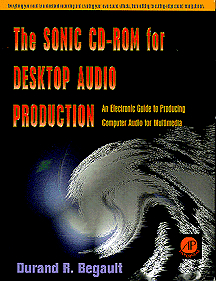

Durand R. Begault recently retired from NASA Ames Research Center in California’s Silicon Valley, where for many years he led work in the Human Systems Integration Division on spatial-auditory displays, auralization, and the perception of 3D sound for aerospace human–machine interfaces. Before joining NASA he was a senior acoustical consultant with Charles M. Salter Associates in San Francisco, a tenure that shaped his long-running interest in room acoustics and early-reflection thresholds.
He is the author of 3-D Sound for Virtual Reality and Multimedia (Academic Press, 1994) — still a foundational textbook in the field — and co-editor, with Francis Rumsey, of An Anthology of Articles on Spatial Sound Techniques: Multichannel Audio Technologies (Audio Engineering Society, 2004). Representative work includes the AES papers “Audible and Inaudible Early Reflections: Thresholds for Auralization System Design” (AES 100, 1996) and, with Cynthia H. Null, “Virtual Acoustics, Aeronautics, and Communications” (AES 101, 1996), and the multi-author NASA technical report “Applying Spatial Audio to Human Interfaces: 25 Years of NASA Experience” (Begault, Wenzel, Godfrey, Miller, & Anderson, 2010). The 1996 Sonic CD-ROM, from which this site descends, was authored at NASA Ames and published by Academic Press.
Selected relevant publications:
- With Elizabeth M. Wenzel, “Headphone Localization of Speech,” Human Factors 35(2), Jun. 1993, pp. 361–376 (DOI 10.1177/001872089303500210) — an early experimental study of how listeners perceive the spatial position of speech under headphone rendering.
- “Head-Up Auditory Displays for Traffic Collision Avoidance System Advisories: A Preliminary Investigation,” Human Factors 35(4), Dec. 1993, pp. 707–717 (DOI 10.1177/001872089303500409) — full-mission simulator results showing a 3D audio TCAS advisory recovers ~2 s of target-acquisition time over a mono earpiece.
- “Auditory and Non-Auditory Factors that Potentially Influence Virtual Acoustic Imagery,” AES 16th Int. Conf. on Spatial Sound Reproduction, Mar. 1999 — a review of the perceptual factors (room reflections, listener position, head movement, and visual context) that govern the believability of 3D audio.
- With Heather D. Heise & Christopher A. Peltier, “Forensic Musicology: An Overview,” AES 54th Int. Conf. on Audio Forensics, Jun. 2014 — representing a separate strand of his work: compositional, recording, and production analysis applied to copyright-infringement and authentication cases.
Michael Cohen
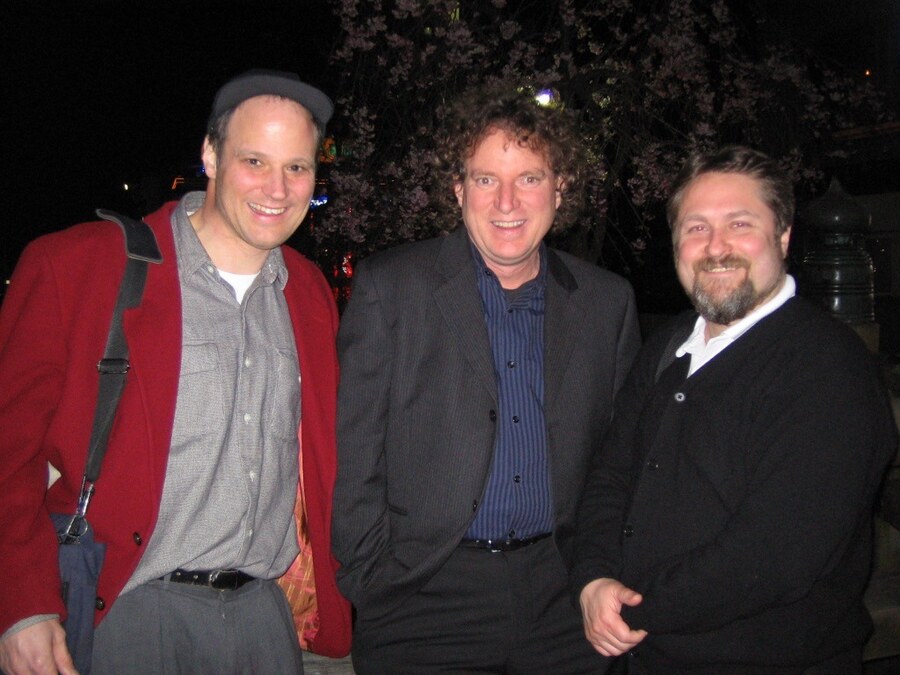
Michael Cohen is Professor Emeritus at the U. of Aizu in Aizu-Wakamatsu and currently at Higashi Nippon International University in Iwaki (both in Fukushima, Japan), where the 2026 modernization of this site was carried out. He received an Sc.B. in Electrical Engineering from Brown University (1980), an M.S. in Computer Science from the University of Washington (1988), and a Ph.D. in EECS from Northwestern University (1991). His positions have included the Air Force Geophysics Lab, the Weizmann Institute, Teradyne, BBN, Bellcore, the Human Interface Technology Lab at the U. of Washington, and the Audio Media Research Group at the NTT Human Interface Lab in Japan. His research spans extended reality, computer music, spatial audio and stereotelephony, stereography, ubicomp, and mobile computing.
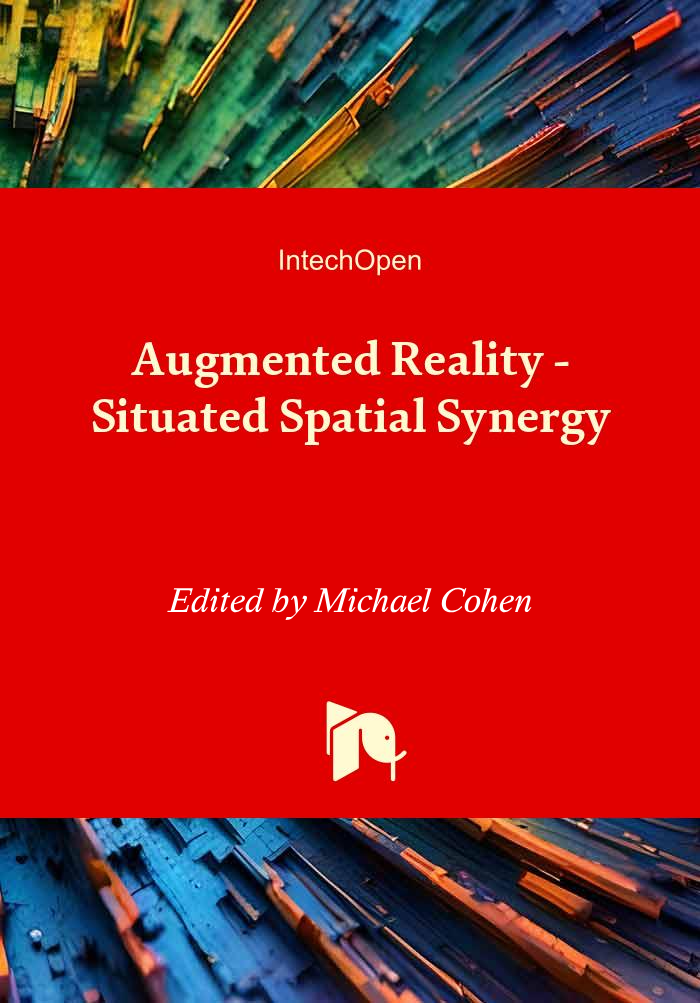
He recently edited the open-access volume Augmented Reality — Situated Spatial Synergy (IntechOpen, 2026), and co-authored two of its chapters: “Spatial Sound Rendering for Audio Augmented Reality” with Jean-Marc Jot, and “Redirected Seating (RDS) in Helical Space” with Alaeddin Nassani. His chapter with William L. Martens, “Spatial Soundscape Superposition and Multimodal Interaction,” appears in J. Blauert & J. Braasch (eds.), The Technology of Binaural Understanding (Springer, 2020). He also develops the Twhirleds mobile app — available on both Google Play and the Apple App Store — a gestural interface for orientation-aware spatial-audio scenes, in the style of both a padiddle (a spun flat object) and a poi (a whirled tethered weight), for multimodal mobile-ambient environments. He serves as an Associate Editor of MIT Press’ Presence: Virtual and Augmented Reality, is on the Scientific Committee of the J. of Virtual Reality and Broadcasting, and is a Senior Member of the IEEE Computer Society.
Selected relevant publications:
- With James Pinkl, “VR Drumming Pedagogy: Action Observation, Virtual Co-Embodiment, and Development of Drumming “Halvatar”” (pp. 70–92), in L. Jing, J. Zhou & Z. Zhang (eds.), Wearable Sensing Devices and Technology, MDPI, Sept. 2024. ISBN 978-3-7258-1984-3 (hardback) / 978-3-7258-1983-6 (PDF) (DOI 10.3390/books978-3-7258-1983-6).
- “Dimensions of Spatial Sound and Interface Styles of Audio Augmented Reality: Whereware, Wearware, & Everyware” (ch. 12, pp. 277–308), and, with Julián Villegas, “Applications of Audio Augmented Reality: Wearware, Everyware, Anyware, & Awareware” (ch. 13, pp. 309–330), in W. Barfield (ed.), Fundamentals of Wearable Computers and Augmented Reality, 2nd ed., CRC Press / Lawrence Erlbaum, 2016 (DOI 10.1201/b18703).
- With Julián Villegas, “Mapping Musical Scales Onto Virtual 3D Spaces,” in Y. Suzuki, D. Brungart, Y. Iwaya, K. Iida, D. Cabrera & H. Kato (eds.), Principles and Applications of Spatial Hearing, World Scientific, 2011, pp. 463–472 (DOI 10.1142/9789814299312_0036).
- With Owen Noel Newton Fernando, “Awareware: Narrowcasting Attributes for Selective Attention, Privacy, and Multipresence” (ch. 11), in P. Markopoulos & W. Mackay (eds.), Awareness Systems: Advances in Theory, Methodology and Design, Springer-Verlag, 2009, pp. 259–289 (DOI 10.1007/978-1-84882-477-5).
- With Sabbir Alam, Julián Villegas, & Ashir Ahmed, “Narrowcasting in SIP: Articulated Privacy Control” (ch. 14), in S. A. Ahson & M. Ilyas (eds.), SIP Handbook: Services, Technologies, and Security of Session Initiation Protocol, CRC Press / Taylor & Francis, 2009, pp. 323–345 (DOI 10.1201/9781315218939).
- With Elizabeth M. Wenzel, “The Design of Multidimensional Sound Interfaces” (ch. 8), in W. Barfield & T. A. Furness III (eds.), Virtual Environments and Advanced Interface Design, Oxford University Press, 1995, pp. 291–346 (DOI 10.1093/oso/9780195075557.001.0001).
- Guest co-editor of two thematic special issues: with Julián Villegas & Woodrow Barfield, Virtual Reality vol. 19, nos. 3–4 (Springer, Nov. 2015) on spatial sound in virtual, augmented & mixed-reality environments (DOI 10.1007/s10055-015-0279-z); and, with Amnon Wolman, Computer Music J. vol. 15, no. 4 (MIT Press, 1991): Dream Machines for Computer Music.
- With Lester F. Ludwig, “Multidimensional Audio Window Management” (ch. 10, pp. 193–210), in S. Greenberg (ed.), Computer Supported Cooperative Work and Groupware, Academic Press, London, Nov. 1991. ISBN 0-12-299220-2 (DOI 10.1016/0020-7373(91)90038-9).
Selected journal articles:
- With Rasika Ranaweera & Michael Frishkopf, “Narrowcasting and Multipresence for Music Auditioning and Conferencing in Social Cyberworlds,” Presence: Teleoperators and Virtual Environments 24(3), Summer 2015, pp. 220–242 (ed. E. Ch’ng; DOI 10.1162/PRES_a_00232).
- “Exclude and Include for Audio Sources and Sinks: Analogs of mute & solo are deafen & attend,” Presence: Teleoperators and Virtual Environments 9(1), Feb. 2000, pp. 84–96 (DOI 10.1162/105474600566637).
- With Nobuo Koizumi, “Virtual Gain for Audio Windows,” Presence: Teleoperators and Virtual Environments 7(1), Feb. 1998, pp. 53–66 (DOI 10.1162/105474698565523).
- “Throwing, Pitching, and Catching Sound: Audio Windowing Models and Modes,” Int. J. of Man–Machine Studies (J. of Person-Computer Interaction) 39(2), Aug. 1993, pp. 269–304 (DOI 10.1006/imms.1993.1062).
- “Integrating Graphical and Audio Windows,” Presence: Teleoperators and Virtual Environments 1(4), Fall 1992, pp. 468–481 (DOI 10.1162/pres.1992.1.4.468).
About this site, in one paragraph
Sonic began life as a 1996 CD-ROM — an interactive interactive primer on sound, audio, and acoustics, authored by Durand R. Begault at NASA Ames and published by Academic Press as a companion to 3-D Sound for Virtual Reality and Multimedia. Michael Cohen later adapted the material into a web edition during his time at the University of Aizu, and is responsible for the present modernization, which adds interactive Web Audio API demonstrations, a glossary, accessibility improvements, and a responsive layout. See Credits & Copyright for additional acknowledgments and What’s New for a running log of the modernization pass.